 |
| My Daughter, Florence, at the Ringing Rocks. This is a very unusual pile of rocks, which when struck ring in a metallic manner. The mechanism for which is currently unknown. |
One of the things I have changed my mind about that has had the biggest impact on my life is the way that I think about the unexplained strange things that happen in life. Some of these things might be more mundane, some cause people to structure their whole life around them. There are many such experiences in my life that I attributed to an all powerful being intervening on my behalf. There are many others that I ignored, or refused to admit even happened. The things I perceived as interventions from higher, intelligent powers, ranged from moments of inspiration in decision making, to unexplained healings and exorcisms. I could fill a page with just the things that I have sorted into this unexplained category from my life. I further sorted them into faith constructive and faith destructive miracles and then tried to minimize in my head the importance of the faith destructive while maximizing the importance of the faith constructive, but this is not the part I want to discuss today. This is about how my view of the whole category of supernatural phenomena.
In my time as a religionist, I held the view that there were things that happened naturally, which were the realm of science, and things then that were unexplainable by science and thus supernatural. This sorting left a realm of mundane occurrences, explainable by mundane techniques, and a realm of mysterious occurrences that could not be explained by mundane techniques. Science could explain how a doctor could heal the sick, but when a faith healer did the healing it was beyond natural, and therefore out of the realm of what science could explain. These miracles or whatever term you like to use for anomalous events, then required some other system to reach explanations. They were, thereby, seen as support for religion in my life. Since science was unable to fathom their depths, religion and spirituality was required to tap into the world beyond. Here was a system that allowed for unusual occurrences. If the sun stopped rising and setting as science required it to, I could attribute the unusual phenomenon to the power of God and his willing the earth to cease its rotation. I was very grateful for the the freedom to kill my curiosity with this all encompassing explanation. This was a great system, I could avoid any questioning of my main religion which encompassed the realm of the unexplainable. The trouble came when I started examining my religion which ruled the realm of the explainable.
After getting tired of my engineering major, I decided to give physics a try. This turned out to be an intimate examination of my understanding science. I started with essentially two curiosity stopping belief systems, which I used to prevent myself from ever having to be unsure. On the one had science was a black box mystery which provided answers about everyday sort of things, and on the other my religious system was a black box mystery that provided answers about unusual experiences. Since I had carefully protected the second system, throwing out any doubt that might try to assault it, and also spent a lot of time trying to understand it, it seemed like an appropriate time to get a better understanding of the first mystery answer box.
Before spending time on understanding my "regular occurrence" religion, science felt like a list of answers to questions that other people had answered. It was merely a lookup table that could be checked to find answers to any question I might have about things that happen with some regular frequency. I have already written about how understanding the math and theory behind changed my mind about the age of the earth, but my education became a series of similar events. Slowly the magic fell away. It was a process that required many walks home from class with my head spinning as I wrapped my head around the implications. I felt like a child seeing the world for the first time. Having been warned, as I described before, against the power of science in creating apostasy I was prepared for a list of answers that might disagree with my other religion. Howsoever, what I was not prepared for, was the humility of science.
When I started my education in physics, I saw no difference essentially between my two religions. I had spent years in deep study of my "religion of the unexplainable." When I searched for explanations from this answer box about the mysteries of these phenomena, I received answers. I received answer through both methods as mundane as reading and as mysterious as revelation. The answers were equally mysterious, and I wondered and worshiped at the mystery. When I searched from answers from my "religion of the explainable," it was a very similar experience. While I didn't realize I was treating these two things the same way, looking back it is pretty clear to me. The biggest shock of my examination of my "natural religion" was its admission of error. A magic answer box should never admit error if it is to be trusted! It took me a long long time and a lot of mental anguish to wrestle with this admission of guilt. Even worse than admitting error, it admitted uncertainty! This is an element of empirical research that had somehow been omitted in my understanding of science to this point in my life. I had held on to, and required certainty from both of my religions.
Uncertainty is incredibly uncomfortable for me. I have become more comfortable with it over time, but I want there to be a well defined answer to any given question. I think this is a common view, and as a culture we have in our minds that if something is uncertain it is less valuable. My mistake was in assuming certainty was possible. In ignoring the super unlikely events that would make my whole world view nonsensical. An example from my religion of the explainable is the refutation of the Ptolemaic earth centered universe. All the regularly occurring phenomena were consistent with an earth centered view of the universe, and experiment regularly confirmed that sun and stars orbited the earth. This is of course a simplistic view of the history, but for a detailed consideration of this particular scenario I recommend Paul Feyerabends book, Against Method It took occurrences that were considered uncommon and perhaps even miraculous being incorporated into the theory to realize a shift was necessary.
 It took occurrences that were considered uncommon and perhaps even miraculous being incorporated into the theory to realize a shift was necessary.
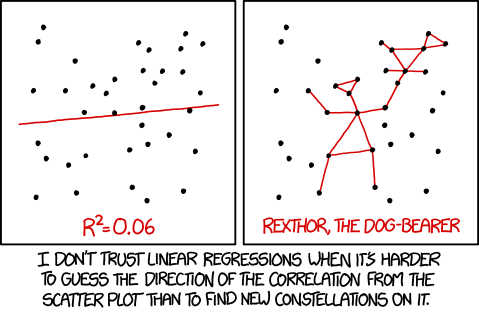
These unusual occurrences are often ignored for ease of communication, and this can make them appear nonexistent. For example, if you asked me how tall my office door is I would promptly get my tape measure to begin answering your question. I believe strongly in the old adage "measure twice, cut once" so I decide to make several measurements of the doorway. Say I measure it 10 times, writing down the measurement each time. I come up with a list of 10 numbers. The whole point of measuring 10 times is that I have assumed I may make some error, and I need further evidence in order to give you an answer. Say of my measurements, 9 of them are between 7 feet and 7 feet 1 inch but the one of them was 11 feet 6 inches. How do I answer your question? I collected data on the doorway, and it is not exactly straightforward. I have 9 answers that more or less agree, and 1 that does not. While there can be a number of ways to explain the 1 measurement, and why it might be ignored for the sake of our conversation about the doorway, the fact is that it still exists. I may tell you that the door is between 7 feet and 7 feet 1 inch, or I may tell you that 90% of the time it is so, while 10% of the time it appears to be much larger. I can chalk it up a mistake in writing down the measurement, or maybe I didnt notice I had 4 feet of tape laying on the floor. I could also assume that a supernatural occurrence where God, who is obviously at least 10 feet tall, needed to expand the doorway while he walked through, right at the time I measured. Whichever of these actions I take following the measurement change the real issue. Even if I through out the outlying measurement, the ones that more or less agree, still have a bit of uncertainty. The point of this example is that certainty is not something that is possible in considering phenomena, regularly occurring or unusual.
 |
| https://xkcd.com/1725/ |
This realization, and the admittance in the answers given by the science, changed my mind about the requirement of another system, one to explain the unexplainable. The religion of the mundane was not running from these weird data points, but embraced them and used them to move forward. It did not want to hide them, but to put a big red flag on them so that they could be studied harder. This took it from the realm of a religion, to an honest endeavor to understand. This was the humility of science that I came to love. The honesty to say, this answer is uncertain, but when you try to check it out for yourself, this is how I got the answer I gave you. No matter how much I pushed into answers given by my religion of the unexplainable, it never became a technology. It never turned into a tool for creating new answers and verifying old ones, and once I found out that my religion of the explainable was doing everything in its power to not be a magic answer box I lost most of my interest in the unexplainable. My Scientism destroyed itself by the study of science giving tools for checking and verifying the answers given, while owning up to that which was unknown and uncertain. Meanwhile my religious answers remained as confusing and uncheckable, all while doubling down on the what I now view as absurd insistence on absolute certainty. Not only is that not an empowering tool for finding answers, its kind of boring. I lost my faith, not because I didn't believe its claims, but because I found that uncertainty is a part of the human understanding, and that science is far more messy than it might appear. If no one had told me beforehand that God sometimes walks through doorways, and he stretches them taller when he does, I would never have jumped to that conclusion on the one outlying data point. It may be true, but it seems a lot less likely than other more mundane explanations. I would be lying if I said that I believed it, and an extension of that simple example to various other phenomena such as faith healings or other miracles is the story of how I changed my mind about their importance.
I found that removing both of my religions took away my ability to easily stop curiosity from forming in my mind. Curiosity is the great driver, which pushes inquiry forward both on a personal and societal scale, and I have removed two great obstacles to curiosity. I was grateful to them when I knew not of the drive curiosity can create, and the pleasure that can be derived from pursuing its leads. I loved the one for fear of damnation in an after life, and the other for fear of ridicule. However replacing the religion of science with the pursuit of curiosity in a scientific manner, I have avoided the damnation in mortality that I had clung on to so tightly for most of my life.
P.S.
Here is a bit of art relevant to today's subject. Song and video are both excellent. One of my favorites.


